


Work backwards through scans
Act from the first screen
01 · The problem
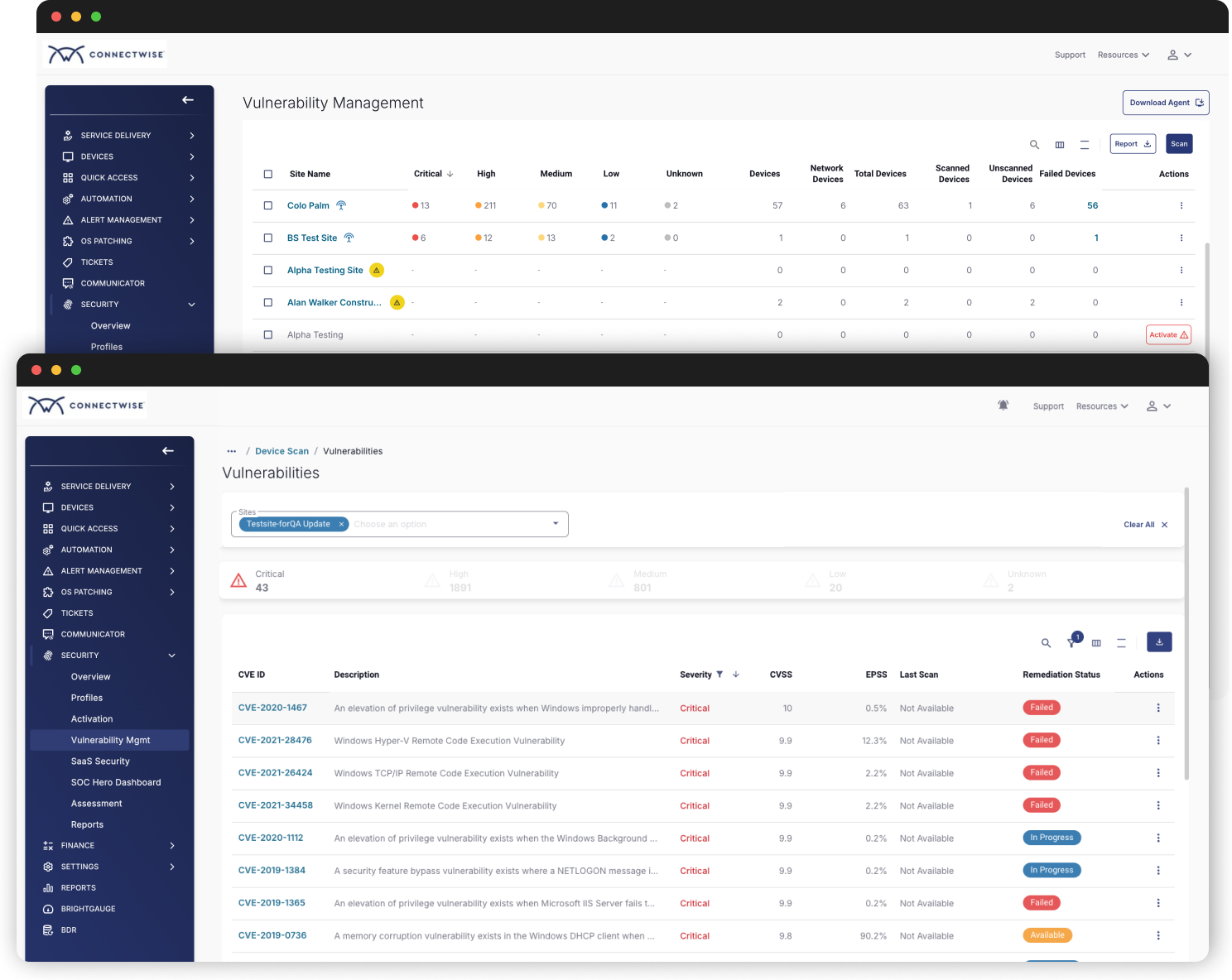
Remediation was buried three levels behind the data that signaled the need for it.
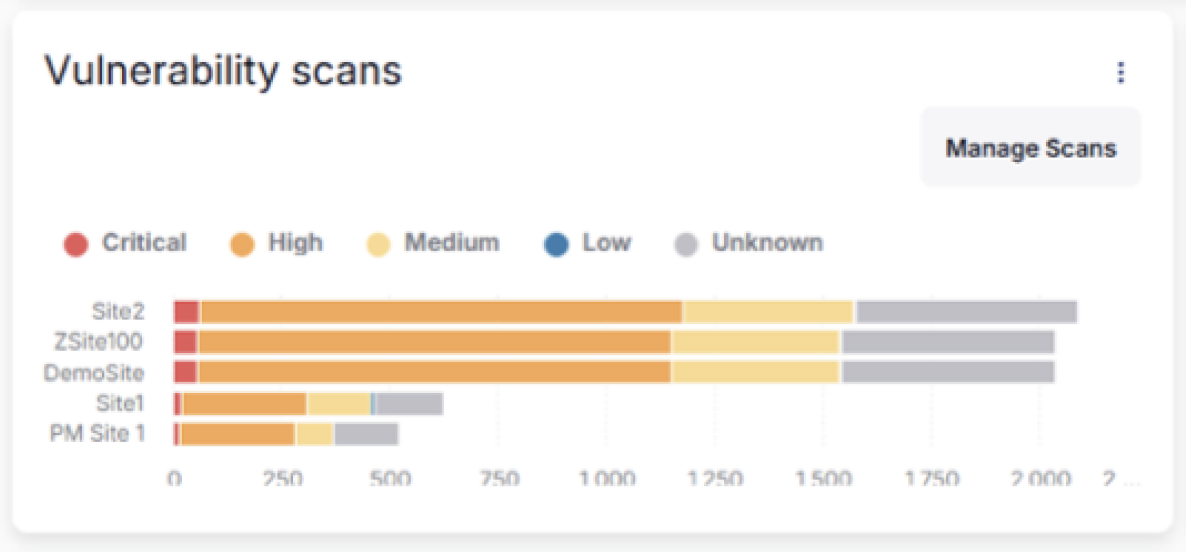
Vulnerability Management was built around scans, so technicians worked backwards through scans, sites and devices before they could act.
Found by eye. Technicians scanned the list for an "Available" status to know what was fixable.
Hidden behind a row menu. Only the menu revealed whether the fix was a patch or an external link.
Tracked by hand. Status was a tag users toggled per vulnerability, 2,757 of them on one test site.
02 · Constraints
An IA shift inside a system I couldn't rebuild.
Scan-first data model
The back end stayed organized by scan, so this had to be an IA shift, not a rebuild.
Limited API at MVP
Patch deployment already lived elsewhere, so the new flow had to match it without duplicating it.
Top-down dashboard mandate
Security features had to live in categorized dashboard tabs, a structure that wasn't mine to change.
03 · Key decisions
Three questions reshaped the workflow.
What is the primary unit of work?
Vulnerabilities, not scans. Years of Pendo data showed technicians rarely opened scan details unless forced to, which made a structural change easy to defend.
The list starts with the riskiest item, not the latest scan.
Build a new remediation flow, or mirror existing patch tooling?
I aligned with the OS patching tools instead of building something parallel. Limited API access ruled out a separate flow, and reusing the same components made the two feel like one product.
Same components, same words, nothing new to learn.
Keep per-vulnerability tracking, or collapse remediation into one decision?
One clear action per patch. Toggling a status on every vulnerability added a step that didn't match the real work, so status now follows the deployment and scans moved into setup.
2,757 manual toggles on one test site became zero.
04 · The solution
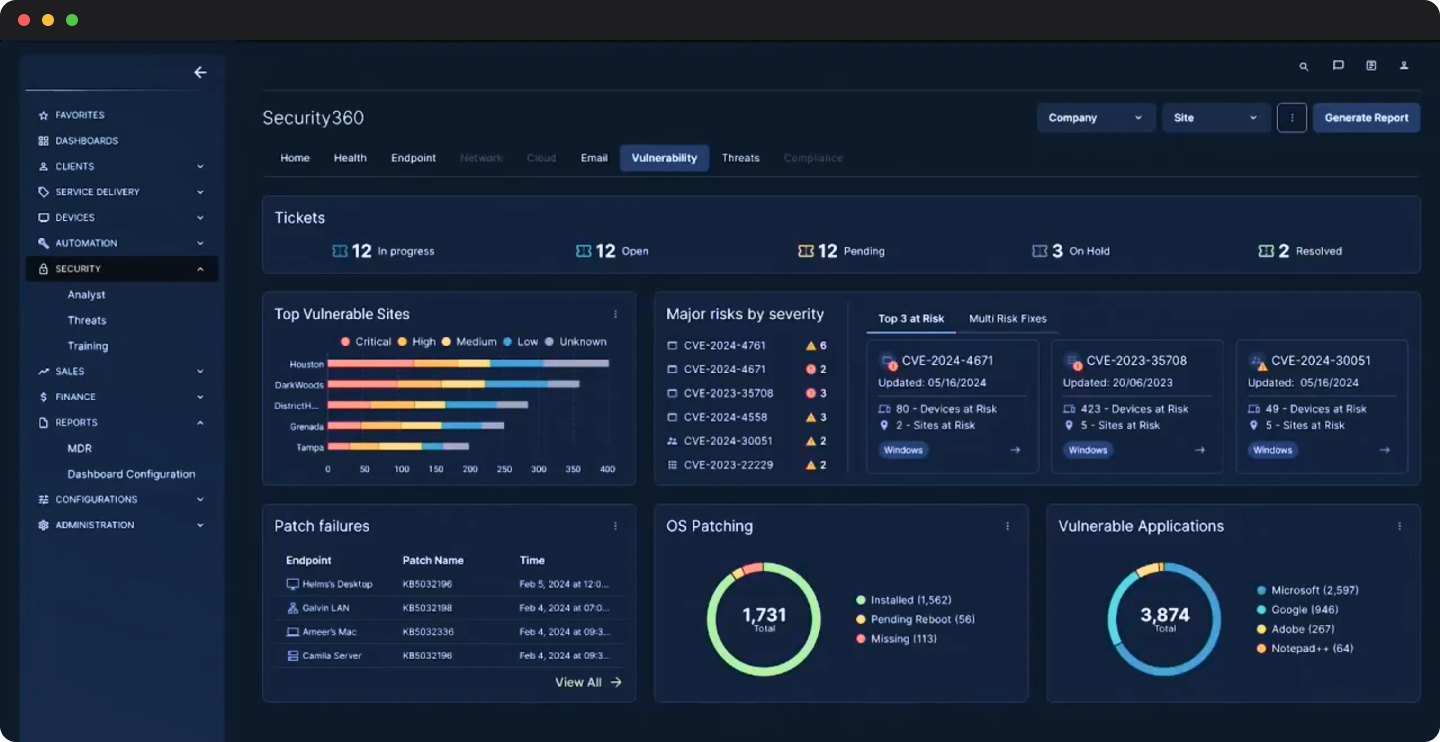
Fix it from where you found it.
1Start with the riskiest
Major risks by severity
- CVE-2023-357083 critical
- CVE-2024-46712 critical
- CVE-2024-47616 high severity
- CVE-2024-45583 high severity
- CVE-2024-300512 high severity
- CVE-2023-222292 high severity
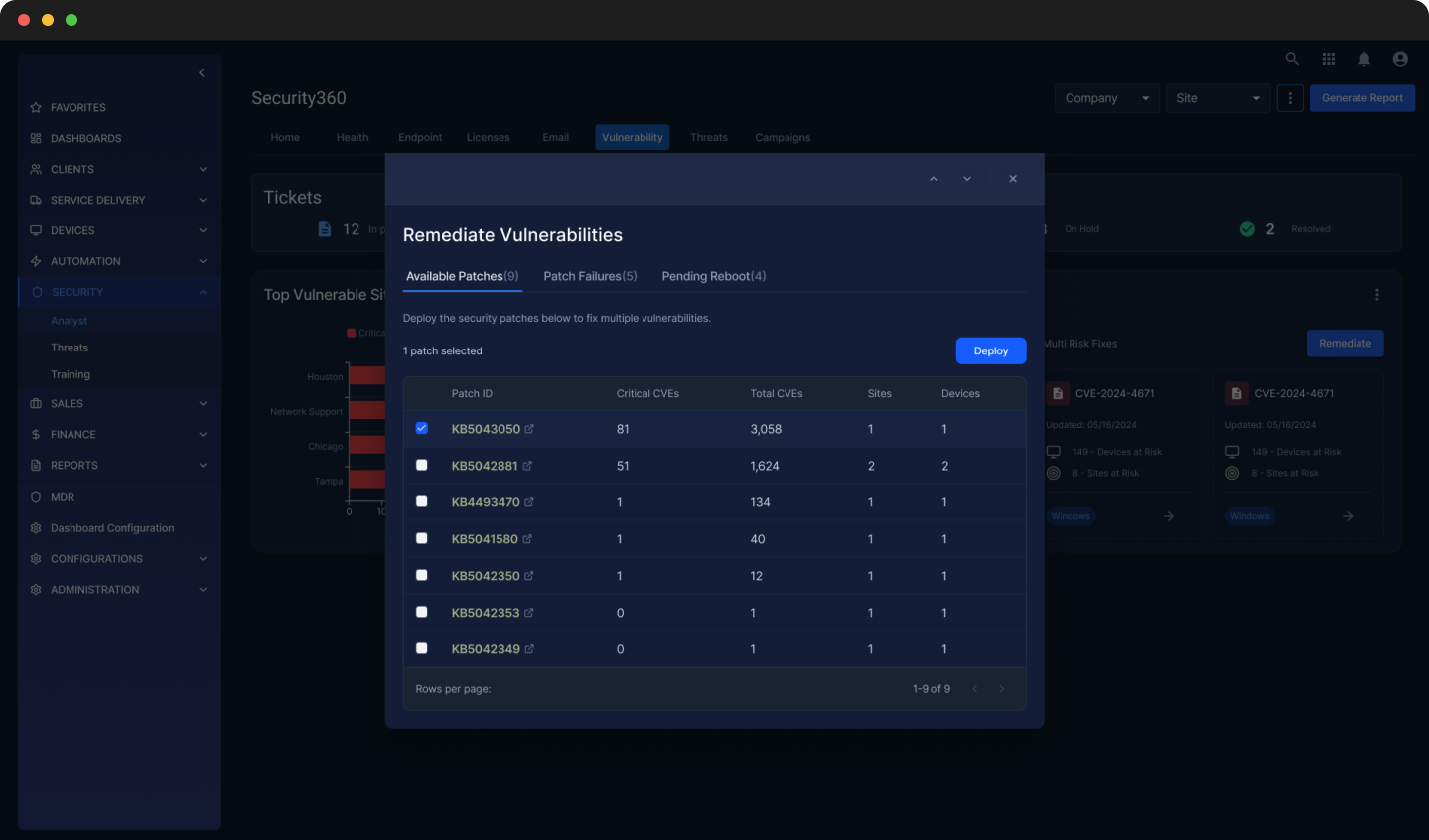
2Pick a patch
3Choose the scope
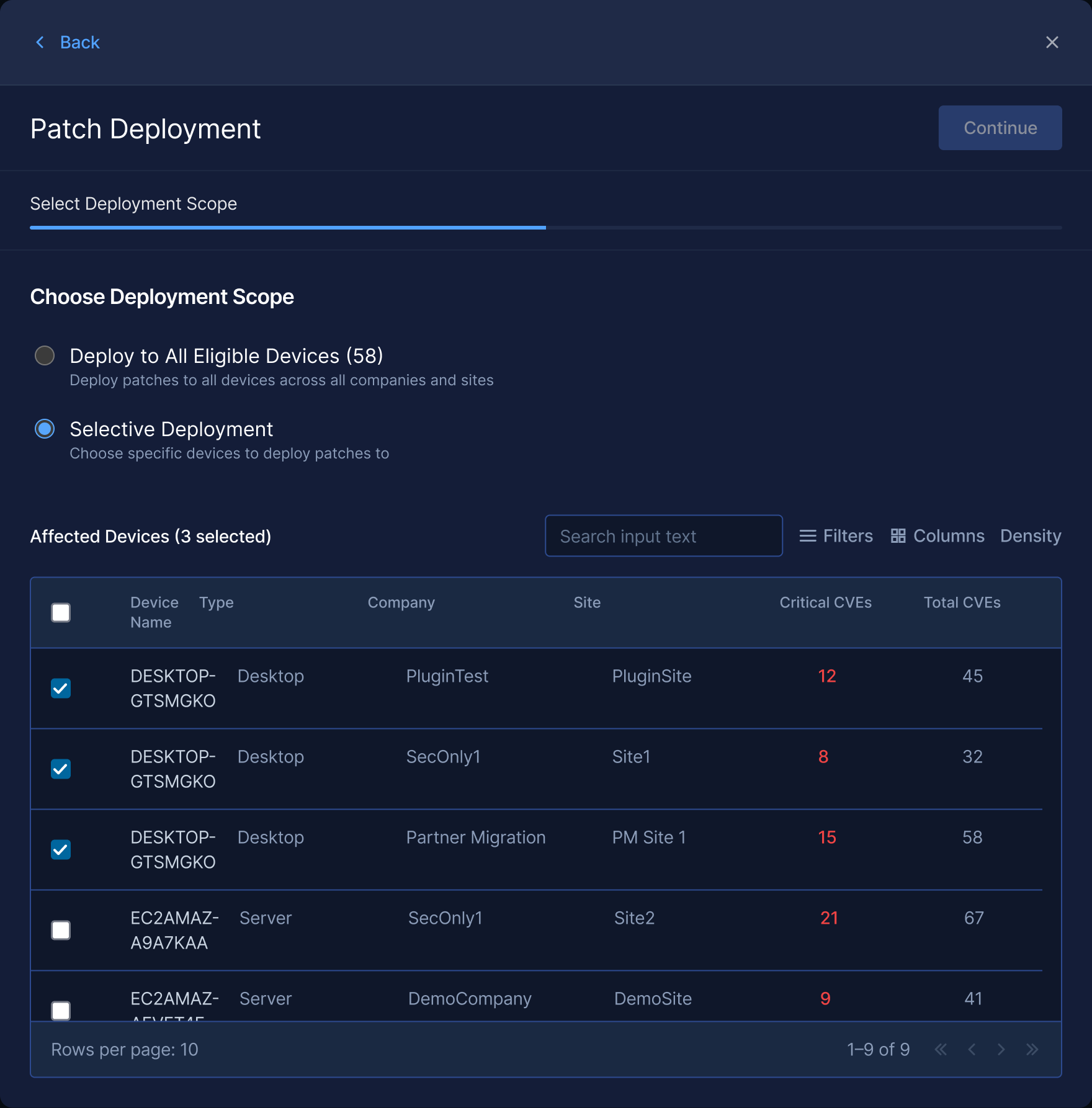
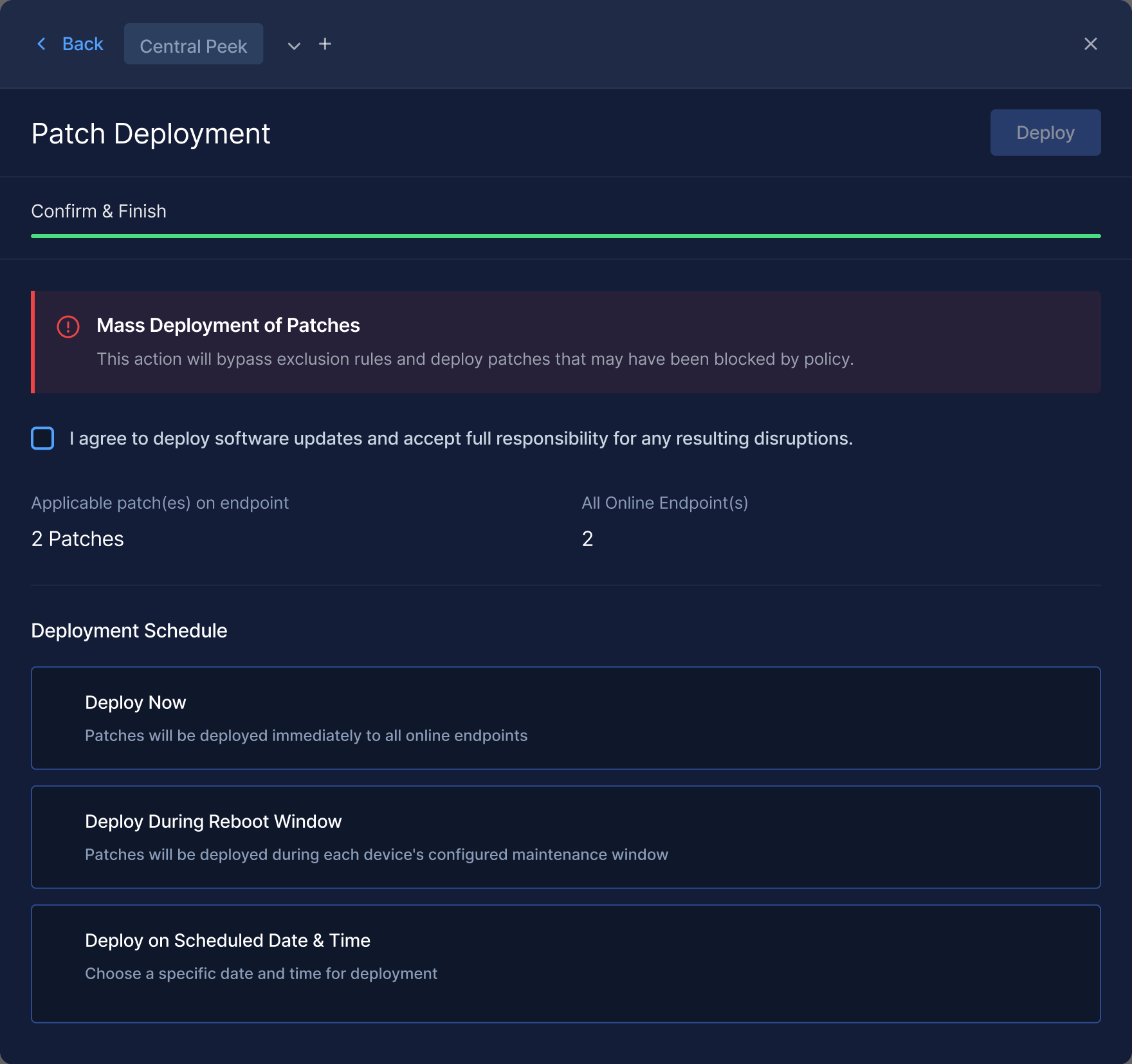
4Confirm with a safety net
5Finish what you start
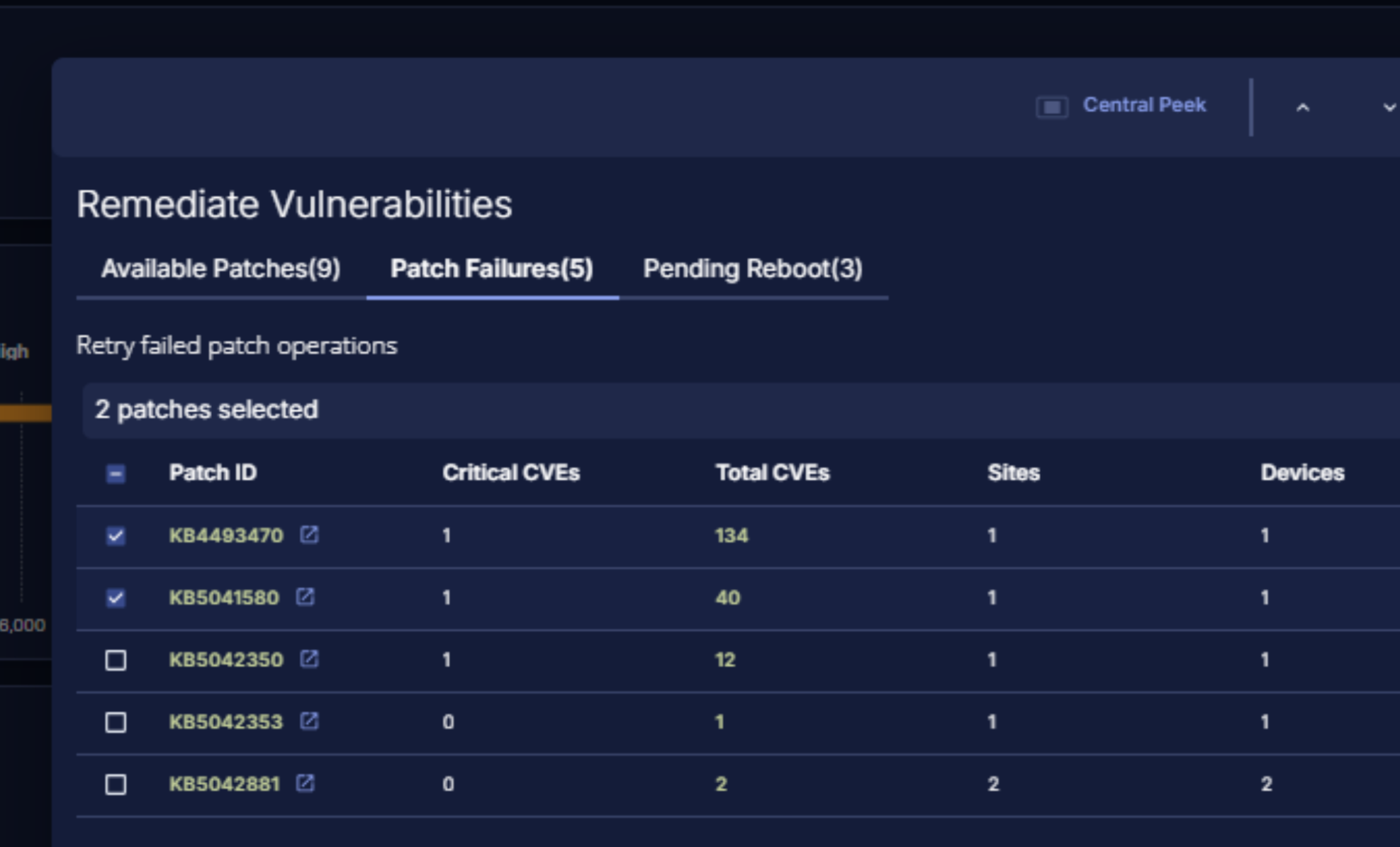
Failures and reboots stay in view
Failed patches and pending reboots sit in their own tabs beside new patches, ready to retry, so a fix gets finished, not just started.
05 · Outcome
What changed
Levels before acting
0
down from 3: scan, site, device
Technicians act straight from the severity-ranked list.
Manual status toggles
0
down from 2,757 on one test site
Status now follows deployment state instead of a hand-set tag.
Fixes per deploy
Many
was one at a time
One patch covered 3,058 CVEs in test data.
To finish a fix
1 panel
deploy, retry, reboot
Patches, failures and pending reboots live in one place.
